
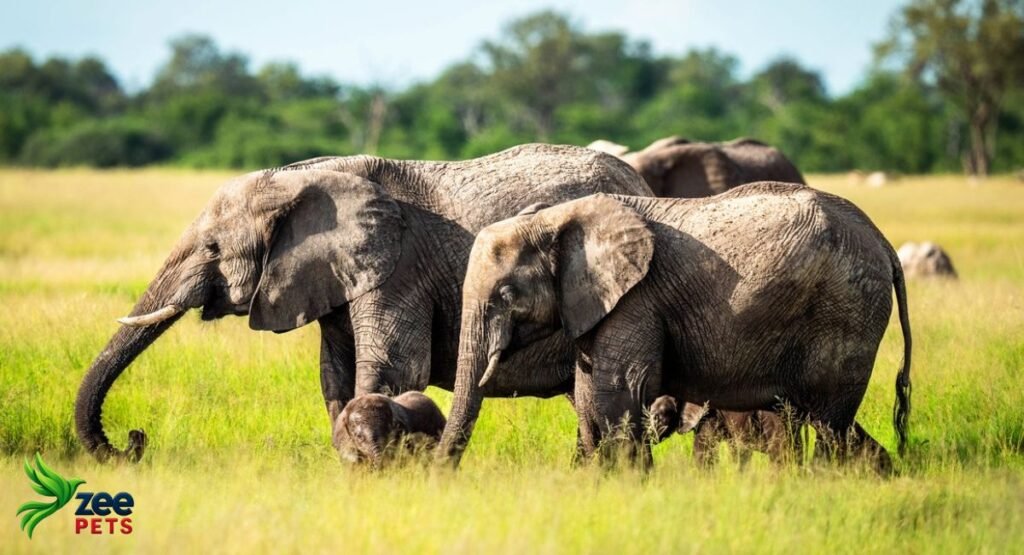

Elephants may be huge and powerful, but their greatest survival tool isn’t their size — it’s their memory. Spend a little time observing them and you’ll notice that they behave almost like wise elders of the animal world. They remember places, faces, voices, dangerous events, and even moments of kindness. And all of this isn’t just interesting trivia… it’s what keeps them alive.
Remembering Where Life-Saving Water Is
In the wild, water isn’t always easy to find. Rainy seasons come and go, rivers dry up, and some years are harsher than others. This is where the wisdom of older elephants becomes priceless. The matriarch — the oldest female — often remembers watering holes she visited when she was young. Even if decades have passed, she can guide her family straight toward them.
When drought hits and grasslands turn yellow, many animals struggle. But elephants start walking with confidence, following the memory of routes their ancestors used long before. It’s almost unbelievable how accurately they can recall the layout of land that stretches for miles.
Faces, Voices, and Even Footsteps
Elephants recognize each other the way we remember old friends. They can recall family members they haven’t seen in years. Sometimes, herds split and reunite later, and the greeting that follows — the rumbling sounds, the touches, the excitement — makes it clear that they didn’t forget one another.
Their memory also helps them stay safe. If they have encountered aggressive predators or dangerous humans in a certain area, they remember that too. A single bad experience is enough for elephants to avoid a place for a very long time. It’s like keeping a mental list of “safe zones” and “danger zones.”
Learning From the Older Generation
Young elephants spend years watching and copying the adults. They learn what plants are safe to eat, which paths are risky, where the cool shade is during the hottest time of the day, and how to cross rivers without getting swept away. These experiences turn into memories that guide them later in life.
What makes this so special is that elephants don’t depend on instinct alone — they depend on what they’ve learned. Each elephant’s personal memory becomes a part of the herd’s survival toolkit.
Emotional Memories That Shape Their Lives
Elephants can form emotional memories just like humans do. When they lose a family member, the whole herd reacts. They stand quietly around the body, sometimes touching it gently with their trunks. And they remember that loss long after moving on.
These emotional memories affect how they behave. If a calf was attacked by a predator in a certain spot, the herd becomes cautious near that area. If a human once helped them, they may show trust if they return. Their memories aren’t cold or mechanical — they’re shaped by feelings.
Their Communication Depends on Memory Too
Elephants communicate through low rumbles that travel through the air and even through the ground. Calves learn the meaning of these signals as they grow: warnings, reassurances, travel cues, or simple “stay close” messages.
A lot of this communication is based on shared memories. A call from the matriarch might mean, “Follow me to the water we found years ago,” or, “Let’s avoid that side of the river.” The herd responds instantly because they trust the knowledge behind her decisions.
Getting Through Harsh Seasons
Nature isn’t easy on elephants. Seasons change quickly, food disappears, storms arrive, and dry months can go on longer than usual. But elephants have something many animals don’t: a mental map created over generations.
They remember the rhythm of the land — where the grass grows first after rain, which trees hold the most fruit, and which forests stay cooler during the hottest days. Even when the landscape slowly changes over time, their memory helps them predict where resources might be.
Passing Wisdom to the Next Generation
Every elephant adds new experiences to the herd’s collective memory. That’s why matriarchs are so important — they carry decades of life lessons. When they die, the herd loses far more than a leader; they lose a walking archive.
But the younger elephants keep learning, keep storing memories, and slowly become the next guides. This passing of knowledge is one of the main reasons elephants have survived in such unpredictable environments for thousands of years.