
Built for Speed From the Ground Up
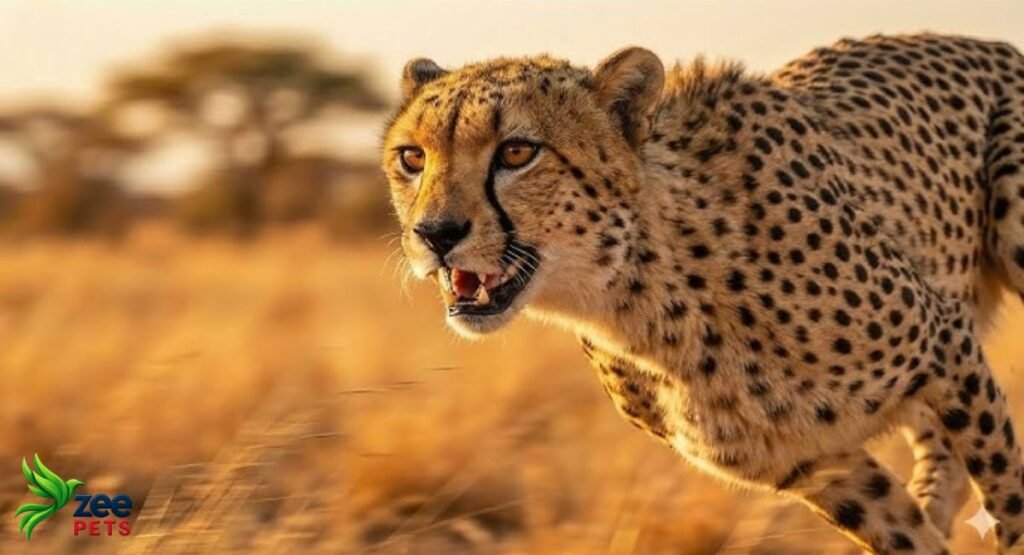
When you look at a cheetah, the first thing you notice is how impossibly light and elegant the animal seems. But that graceful build isn’t just for beauty — it’s the foundation of the cheetah’s unbelievable speed. Unlike heavier big cats that rely on brute strength, cheetahs are designed like living racing machines. Their bodies are slim, their bones are light, and nearly every feature of their anatomy helps them accelerate faster than any animal on land.
Even standing still, a cheetah looks ready to sprint. Its shoulder blades float freely instead of being tightly anchored like in most animals, and that gives its legs an extended range of motion. Longer strides mean more ground covered with every step. It’s like nature gave the cheetah built-in shock absorbers that also act like springs.
Muscles That Explode With Power
Cheetahs aren’t the strongest cats, but their muscles work differently. They’re full of fast-twitch fibers — the kind that fire quickly and generate sudden bursts of power. These are the same kinds of muscles sprinters rely on. But cheetahs have far more of them, which lets them leap into motion almost instantly.
What makes this even more impressive is how efficiently their muscles coordinate. A cheetah doesn’t waste movement. When the chase begins, every muscle knows exactly what to do. Their hind legs thrust forward with tremendous force, pushing off the ground like springs, while the front legs stretch far ahead to create long, flowing strides. Each stride can cover up to 23 feet — that’s longer than a small car.
A Spine That Works Like a Bow
If you ever watch a cheetah run in slow motion, you’ll see something that doesn’t even look possible. As they sprint, their spine bends and snaps back like a bow being pulled and released. This extreme flexibility isn’t just for agility — it’s a major part of how they generate speed.
When the spine compresses, the cheetah brings its legs underneath its body. When it stretches, the legs shoot forward and backward in a powerful motion that lengthens each stride dramatically. This spinal flexibility is so important that without it, a cheetah wouldn’t be anywhere near as fast as it is. It’s the hidden engine behind that blur of speed.
A Tail That Works Like a Steering Wheel
Going fast is one thing, but staying in control while moving at that speed is something else entirely. That’s where the cheetah’s long, muscular tail comes in. The tail acts like a built-in rudder, helping the cat balance and change direction with incredible sharpness.
When a cheetah makes a sudden turn — usually because its prey zigzags — the tail swings the opposite way, giving it the counterbalance it needs to avoid tumbling. This ability to pivot at high speed is what keeps the chase going. Without that tail, a cheetah might run fast, but it wouldn’t be able to actually catch anything.
Oversized Lungs and a Heart Built for the Chase
Speed requires oxygen, and cheetahs have lungs that look oversized compared to the rest of their bodies. Their nasal passages are wide, their lungs are large, and their hearts are strong enough to pump oxygen rapidly through their bloodstream. The moment a chase begins, the cheetah’s breathing changes — it becomes deep and rapid, pulling in as much oxygen as possible to fuel its muscles.
This is critical because sprinting at their top speed — around 70 miles per hour — is incredibly demanding. Their body temperature rises almost immediately, and their muscles rapidly use up oxygen. These built-in respiratory superpowers let them sustain that explosive sprint just long enough to close in on their prey.
But They Can’t Keep It Up for Long
Here’s the catch: all this speed comes with a cost. A cheetah’s body heats up incredibly fast, and within 20–30 seconds it reaches dangerous temperatures. If the chase goes any longer, the cheetah risks overheating, collapsing, or even dying. That’s why cheetah hunts look so quick and decisive. They either catch the prey early or stop the chase entirely.
Because of this limitation, cheetahs plan their hunts carefully. They stalk their prey closely and rely on surprise, reducing the distance they need to sprint. Every chase is a calculated gamble.
Nature’s Most Perfect Sprinter
When you watch a cheetah run, you’re not just seeing speed — you’re seeing millions of years of evolution perfected for one purpose. From its lungs to its spine, from its tail to its muscles, every part of the cheetah is crafted to move across the land faster than anything else alive.
And maybe that’s what makes them so fascinating. They aren’t built for wrestling, climbing, or dragging down huge prey. They’re built for a single job — to run like the wind — and they do it better than any creature on Earth.