
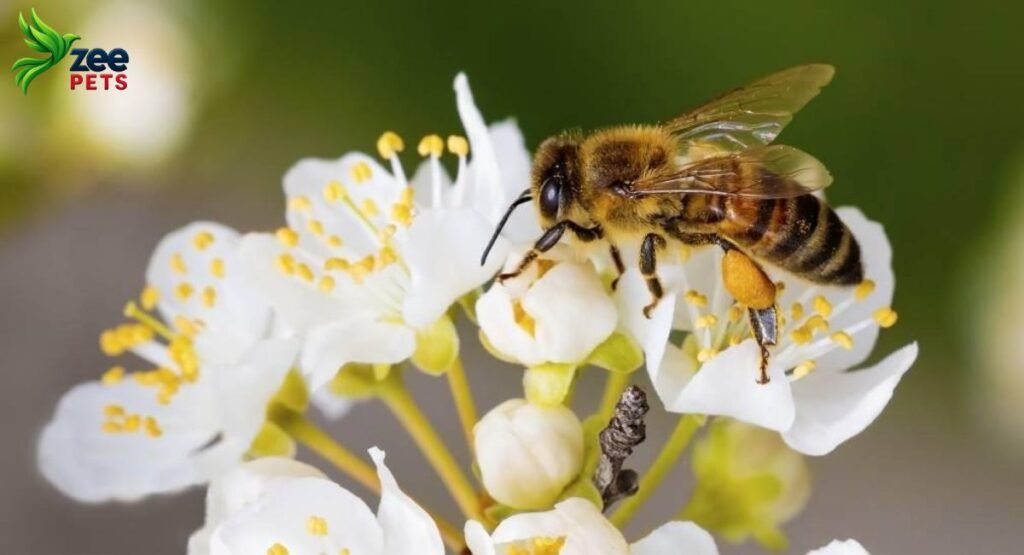

Honeybees may be small, but their impact on our world is enormous. Every buzzing worker in a hive plays a role in keeping ecosystems healthy, crops growing, and food on our tables. Without them, much of the natural world would collapse in ways most people don’t fully realize. These tiny insects work tirelessly, moving from flower to flower, pollinating plants, and supporting life far beyond their own hive. Their world is full of teamwork, intelligence, and incredible dedication that makes them some of the most important creatures on Earth.
They’re Responsible for Pollinating a Huge Portion of Our Food
Honeybees are nature’s most efficient pollinators. As they travel between flowers collecting nectar, they unintentionally transfer pollen — a simple act that allows plants to create fruits, vegetables, nuts, and seeds. Everything from apples and berries to almonds and cucumbers relies on their work.
In fact, experts estimate that one out of every three bites of food we eat depends on pollination, and honeybees handle a significant part of that job. Without them, grocery stores would look very empty, and farming would be much more difficult and expensive.
A Hive Operates Like a Tiny, Organized City
If you ever watch a hive closely, it becomes clear that bees don’t work randomly. Each hive is a perfectly structured community with assigned jobs. Some bees collect nectar, some guard the entrance, and others care for the young. There are cleaners, builders, nurses, foragers, and even undertakers who remove debris to keep the hive tidy.
At the center of it all is the queen bee — the heart of the colony. Her job is to lay eggs, sometimes up to 2,000 in a single day. The rest of the hive works together to make sure she stays healthy and safe. Their teamwork is so efficient that the entire colony functions smoothly without confusion.
Honeybees Communicate Through a Dance
Honeybees don’t talk, but they communicate in a surprisingly advanced way. When a forager finds a rich patch of flowers, she doesn’t keep the secret to herself. Instead, she returns to the hive and performs a special movement called the waggle dance.
This dance shows other bees the direction and distance of the food source. It’s a kind of living map, shared through body movements. Scientists have studied this dance for years and consider it one of the most sophisticated forms of communication in the insect world.
Their Sense of Smell Is Incredibly Powerful
A honeybee’s nose is one of its greatest tools. Bees can recognize the scent of flowers from far away and even tell the difference between similar types of nectar. They also use smell to identify members of their hive, detect danger, and locate the queen.
Each bee carries a unique chemical “signature” that helps keep the hive organized. If an unfamiliar scent appears at the entrance, guard bees immediately react to protect the colony.
Honey Is Their Survival Food, Not a Sweet Treat
While humans enjoy honey on toast or in tea, bees make it for a much more serious reason — survival. Nectar collected from flowers is transformed into honey through a long process of evaporation and enzyme activity. Once stored inside the hive, honey becomes a long-lasting energy source that keeps the colony alive during cold months when flowers are scarce.
A hive must produce enough honey to last the entire winter. Every drop is vital to the bees’ survival.
They Help Entire Ecosystems Thrive
Honeybees don’t just support human crops; they help wild plants reproduce too. When they pollinate trees, flowers, and shrubs, they create food sources for countless other animals — birds, insects, mammals, and even fungi all benefit from healthy plant growth.
This means honeybees indirectly support countless species, making forests richer, meadows fuller, and entire ecosystems stronger.
A Single Worker Bee Works Herself to Exhaustion
The life of a worker bee is short — usually only a few weeks during the busy season — but through that time she works nonstop. A single bee might visit thousands of flowers in one day, traveling miles from the hive before returning home fully loaded with nectar and pollen.
By the end of her life, she’ll have produced only a tiny fraction of a teaspoon of honey. But when millions of bees work together, the hive thrives.
Humans Depend on Them Far More Than We Realize
From farms to forests, honeybees hold everything together. They make it possible for crops to grow, habitats to flourish, and ecosystems to remain balanced. Without them, life as we know it would dramatically change. That’s why protecting bees isn’t just about saving an insect — it’s about protecting our own future.
A Tiny Insect With a Giant Impact
Honeybees may be small, but their role in the world is massive. Their hard work, teamwork, and incredible abilities keep plants alive, food growing, and nature thriving. Each buzz in a garden is a reminder that these little workers are carrying out one of the most important jobs on the planet.