
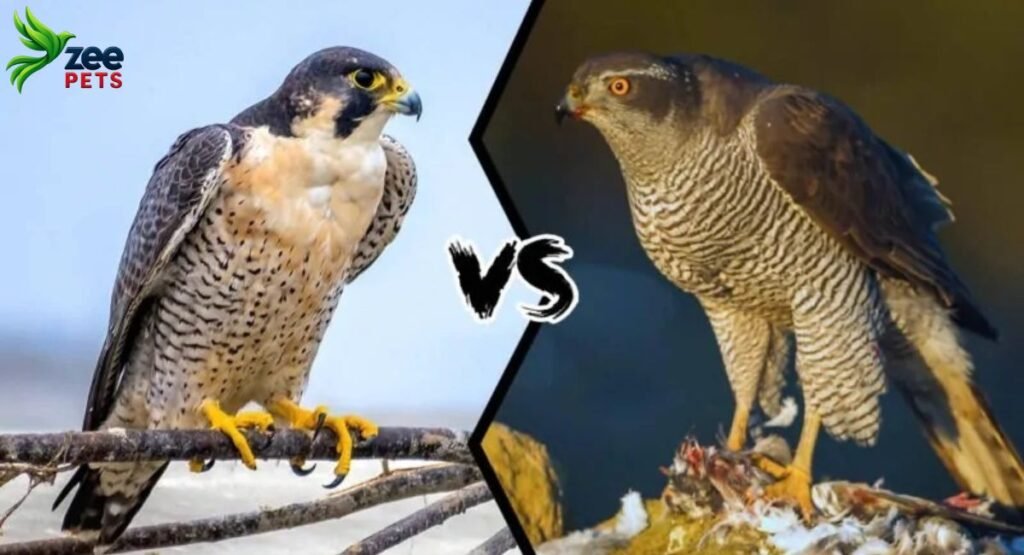

If you’ve ever looked up at the sky and spotted a fast-moving bird of prey, there’s a good chance you wondered whether it was a hawk or a falcon. Both are powerful hunters with sharp talons and incredible eyesight, but despite their similarities, these two raptors have very different styles, shapes, and personalities. Once you learn the subtle clues, telling them apart becomes much easier — even if they’re soaring high above the ground.
Different Wings, Different Flight Styles
One of the quickest ways to separate a hawk from a falcon is by watching how they fly. Hawks have broad, rounded wings designed for soaring. They ride the wind, gliding smoothly with slow, steady wingbeats. This style helps them save energy as they search the landscape for movement below.
Falcons, on the other hand, have long, pointed wings built for speed. Their flight is fast, direct, and powerful. They slice through the air with rapid beats, often looking like feathered arrows. Peregrine falcons — the fastest animals on Earth — take this to the extreme, diving at breathtaking speeds of over 200 mph.
If the bird you’re watching moves with strong, quick wingbeats and sharp turns, it’s likely a falcon. If it circles calmly on rising air currents, drifting effortlessly, it’s probably a hawk.
A Big Difference in Body Shape
Even when perched, hawks and falcons have different silhouettes. Hawks tend to have stockier, fuller bodies and long, broad tails. Their legs appear thicker, and they often look sturdy and muscular.
Falcons look sleeker. Their bodies are slim, and their heads are more streamlined. Their wings appear long even when folded, giving them a more aerodynamic shape. When you see a bird that looks like it’s built for speed and precision, you’re probably looking at a falcon.
How They Hunt: Strength vs. Speed
Hawks and falcons both hunt with incredible skill, but their methods couldn’t be more different.
Hawks rely on strength and strategy. Using their powerful talons, they often swoop down on prey from above or wait patiently on a branch before launching a sudden attack. Many hawks hunt small mammals like mice, rabbits, and squirrels. Their gripping power is impressive — they can hold onto a struggling animal firmly enough to stop it instantly.
Falcons use speed and aerial agility. They chase birds in midair, striking with such force that their prey rarely has time to react. Falcons don’t depend on heavy talons like hawks do. Instead, they have a unique “tooth” on their beak — a small notch that helps them deliver a quick, precise bite to the neck of their prey. It’s a hunting method that requires amazing accuracy and split-second timing.
The Beak: A Small Clue With Big Meaning
If you ever get a close look, the beak offers another clear distinction. Falcons have that special notched “tooth” on the side of their upper beak, which helps them kill quickly. Hawks don’t have this feature. Their beaks are curved and strong, but smoother, designed mostly for tearing rather than delivering a fatal bite.
This tiny difference says a lot about how each bird evolved to hunt in its own way.
Eyesight That Takes Survival to the Sky
Both hawks and falcons have eyesight far beyond human ability, but they use it differently. Hawks often scan open fields from tree branches or posts, watching for the slightest twitch of movement. They’re masters at spotting prey through tall grass.
Falcons use their vision while flying at high speeds. They can track birds in midair, adjusting their direction instantly. Their eyes are designed to stay focused even when diving at unbelievable velocities.
Where You’re Most Likely to See Them
Hawks and falcons often live in different environments. Hawks prefer open spaces, woodlands, and areas where they can perch and watch. Red-tailed hawks, for example, are commonly seen sitting on telephone poles along highways.
Falcons are more at home in wide-open skies. They nest on cliffs, tall buildings, and open plains where they have plenty of room to dive and chase. Peregrine falcons often adapt to cities, using skyscrapers the same way they use mountain ledges in the wild.
Personalities That Match Their Build
Their temperaments also reflect their body styles. Hawks are deliberate and powerful, more patient in their movements. They don’t rush — they wait, watch, and strike with controlled precision.
Falcons are energetic, intense, and extremely fast-paced. Their entire lifestyle is built around quick reactions and split-second decisions.
Once You Know the Clues, It’s Easy
The next time you see a bird of prey, pay attention to shape, flight, and behavior. A sturdy bird gliding in wide circles is most likely a hawk. A sleek, pointed-wing shape darting across the sky is probably a falcon. Their silhouettes, movements, and hunting techniques reveal exactly who they are once you learn to read them.
Both birds are fascinating and fierce in their own ways, each perfectly adapted to its own style of life. And the more you learn about them, the more you appreciate the incredible variety in the world of raptors.